A TCO in construction Plano, TX projects is the paperwork that lets a building open before every last inspection is closed out. It's not a workaround for code compliance. It's a short, closely monitored bridge between substantial completion and the final sign-off, and getting the timing wrong can delay a grand opening by weeks.
Our crews at OKI General Contractors have walked Plano clients through this exact process on retail build-outs and additions, and the projects that move fastest are the ones that understand the clock before they ever file.
What Is a TCO in Construction?
A temporary certificate of occupancy (TCO) is a conditional document that allows a building to be used before every final inspection is complete, typically issued when only minor punch-list items remain. The building official has to be satisfied that what's unfinished won't put anyone at risk.
The 2024 International Building Code section 111.3 provides for issuance of a Temporary Certificate of Occupancy to use a portion or portions of a building or structure provided that such portion or portions shall be occupied safely. Most Texas municipalities, including Plano, adopt this model code authority with local amendments layered on top.
How Long Is a TCO Valid in Plano, TX?
This is the question that actually determines a project's schedule. A TCO shall be limited to 45 days from date of issuance.
A TCO is processed as an additional inspection on a project permit rather than a brand-new application, which keeps it tied to the original permit record.
When the clock runs out, there's no grace period. Upon expiration, TCOs shall become null and void. Continued occupancy after that point is a code violation, and renewal requires Building Official approval, and a TCO renewal shall only occur once and is limited to 45 days. That means a Plano project gets one shot at a TCO, one renewal, and 90 total days to close out the final CO before it has to stop using the space.
Plano's 45-day term is tighter than some comparable cities but looser than others:
| Jurisdiction | TCO Validity | Renewal |
|---|---|---|
| Plano, TX | 45 days | One renewal, 45 more days |
| San Antonio, TX | 30 days | New application required |
| New York, NY | 90 days | Renewable |
A Temporary Certificate of Occupancy application expires 30 days from the date of application in San Antonio, and TCOs typically expire 90 days after issuance in New York City, so Plano sits in the middle of the pack regionally but well below the 90-day benchmark some national guides cite as standard.
How to Get a TCO in Plano: Step-by-Step
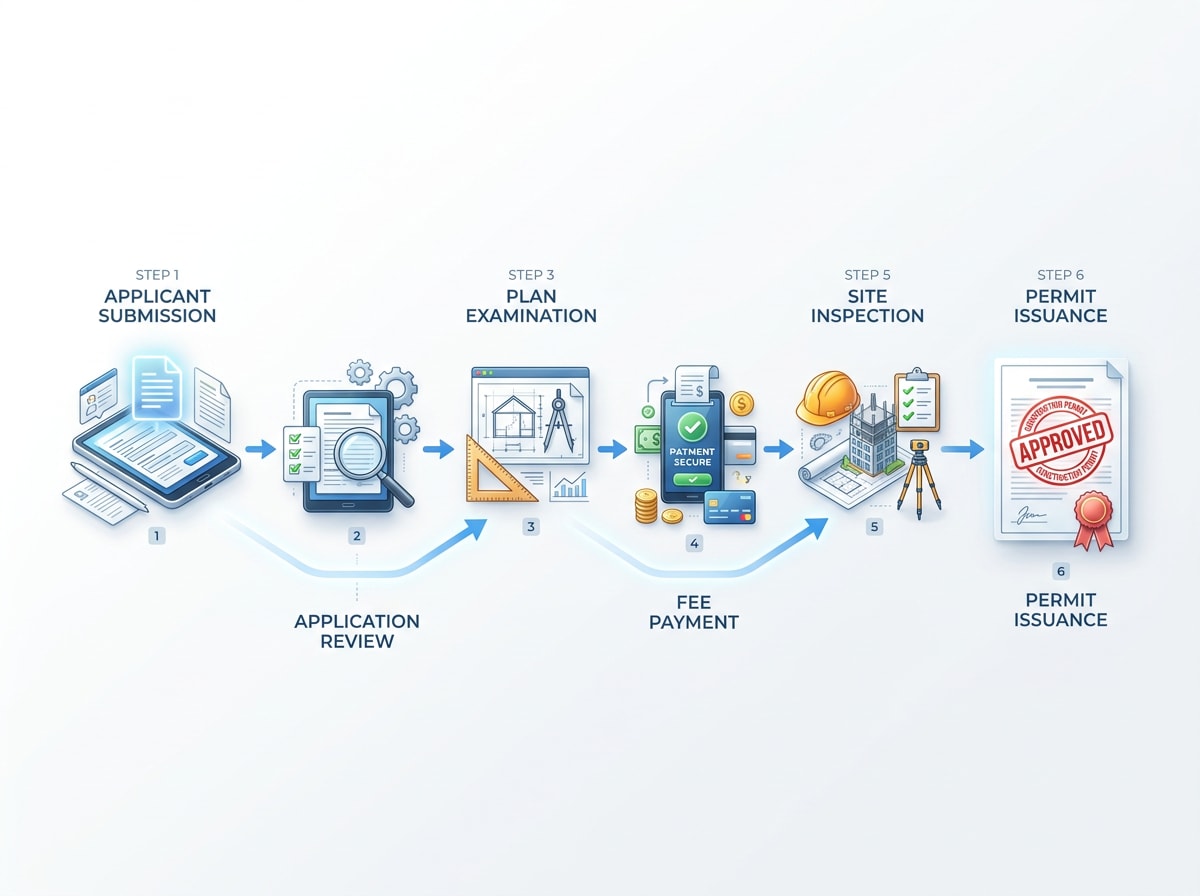
The process is faster when the paperwork is clean the first time. Here's the order Plano actually follows:
- File the TCO request against the existing permit. This isn't a new application; it's an amendment, so it has to reference the original permit number and spell out exactly what's unfinished.
- Clear every trade's final inspection, or get written sign-off on what's pending. MEP, fire, health (for food service), and structural are the usual gatekeepers.
- Pay the TCO fee.
A new TCO costs $100 for the project plus $100 for each outstanding trade that hasn't received and passed a Final Inspection (MEP, Health, Engineering, Fire, Backflow). A project with three unfinished trades is looking at $400 before the certificate is even issued.
- Get the building official's sign-off. Once approved, the 45-day clock starts immediately.
- Track the expiration date like a hard deadline. There's no automatic reminder, and missing it means the space goes dark until a new TCO or the final CO is issued.
If a project has several uninspected systems at once, that per-trade add-on fee climbs fast, so it's worth budgeting for before the request goes in. If you're scoping a Plano project and want help estimating where it'll land, get a free estimate before you file.
What Requires a Building Permit in Plano, TX?
A TCO only matters once a permitted project is already underway, so it helps to know what triggers a permit in the first place. The threshold for "minor work" in Plano is narrower than a lot of homeowners expect.
- New construction and accessory structures
- Additions or remodels that touch exterior walls or windows
- Most electrical, plumbing, and mechanical work, including
any permanent electrical work beyond basic outlet/switch replacement
- Roof replacement, since
roof replacement triggers a permit in Plano if you're changing the type of roofing material or the underlying structure
- Fences and walls, where
fences over 6 feet tall, all masonry walls over 4 feet, and pool barriers require a permit
- Decks, since
most Plano decks require a permit unless they're under 30 inches in height and unattached
- New driveways or hardscape tied to drainage
If your project involves a full gut remodel or structural changes, our general contractor services team can help confirm which permit category applies before you submit.
What Doesn't Require a Permit?
Cosmetic work generally stays exempt: painting, wallpapering, cabinet installation, and flooring replacement don't require city sign-off in most Texas jurisdictions. Simple fixture swaps on existing wiring or plumbing, like replacing a faucet or light fixture without rerouting lines, are also typically permit-exempt. Small accessory structures that fall under the state's minimum size and height thresholds can also skip the process, but confirm the exact cutoff with the Building Inspections Department before assuming a project qualifies.
Plano Building Permit Cost
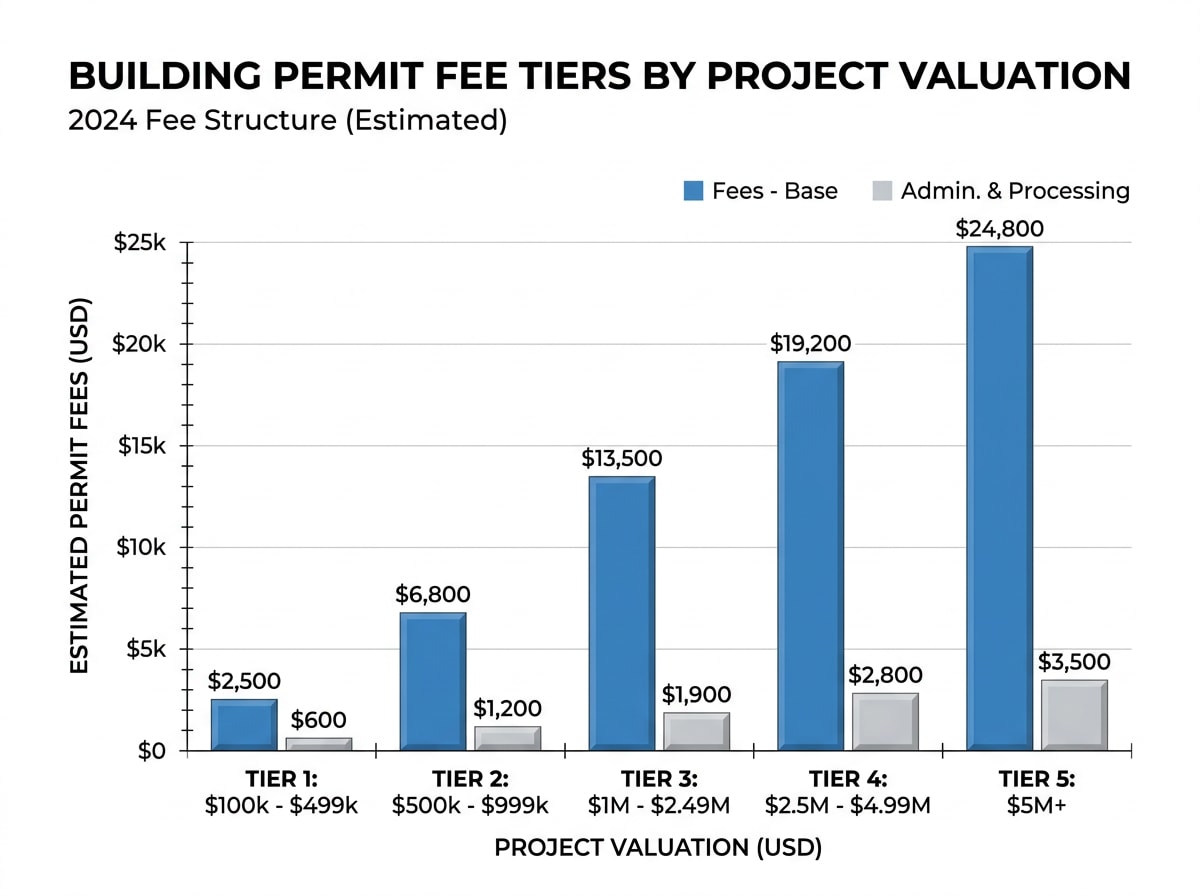
Plano prices most permits on a valuation-based sliding scale rather than a flat rate. According to one permit-expediting firm's published breakdown of the city's fee tiers, projects valued at $1 to $500 pay a flat $24 fee, and larger jobs move through brackets that add a per-$1,000 rate as valuation climbs, reaching roughly $5.25 per $1,000 above $500,000 in value.
| Project Valuation | Typical Fee Structure |
|---|---|
| $1 to $500 | Flat minimum fee |
| $2,001 to $25,000 | Base fee plus per-$1,000 increment |
| $100,001 to $500,000 | Base fee plus smaller per-$1,000 increment |
| Over $500,000 | Flat rate per $1,000 of valuation |
Commercial projects carry an extra cost most owners don't budget for upfront: a plan review fee equal to 65% of the commercial permit fee is due at submittal , on top of the permit fee itself. On a $50,000 tenant finish-out, that review fee alone can run into the thousands before construction even starts.
Plano Plan Review Timeline
Electronic submittal can take 1-3 business days for intake before it gets assigned to a Plan Reviewer, and once assigned, the first and any subsequent submittal reviews typically take approximately 10 days. Commercial projects with multiple disciplines involved (health, fire, engineering) tend to sit toward the longer end of that window.
Submitting a complete, well-organized packet the first time is the single biggest lever a project team has over how fast review actually moves. Incomplete submittals get kicked back for corrections, which resets part of the clock.
How to Get a Building Permit in Plano, TX
Getting from application to a finished, occupiable building in Plano follows a defined path that eventually leads to the certificate of occupancy, or, for projects that need to open early, the TCO process covered above.
Step 1: Prepare the documents. Site plans, construction drawings, and a completed application identifying the owner, contractor, and scope of work. Larger commercial projects typically need sealed, signed plans from a licensed architect or engineer.
Step 2: Submit and pay. Plano eTRAKiT supports permit applications, permit searches, project searches, contractor searches, property searches, inspection scheduling, inspection cancellation, and license searches , so most of the process runs through one portal.
Step 3: Pass plan review. Expect 1 to 10 business days depending on complexity, as noted above.
Step 4: Begin construction within the permit's active window. Permits that follow standard IBC administrative provisions lapse if work doesn't start within a set period, typically 180 days, so don't sit on an issued permit.
Step 5: Schedule inspections and close out. Completing every required trade sign-off leads to the final certificate of occupancy, or the TCO path if a short punch list remains.
One more trigger worth flagging: project registration with the Texas Department of Licensing and Regulation is required for most commercial and public accommodation projects with an estimated cost of $50,000 or more , through the TABS accessibility compliance system. Skipping that registration on a qualifying project can hold up your final inspection even after the building itself is ready.
For teams managing projects across North Texas, our Plano, TX service area page covers local support options, and if your scope includes a full remodel, the full home remodeling team can walk through permit timing before work starts. If you're weighing a design-build approach on a larger project, our guide to design-build contractors in Frisco breaks down how that process and permitting typically overlap.
FAQ
How long is a TCO valid in Plano, TX?
A TCO is limited to 45 days from the date of issuance. One renewal is allowed, also capped at 45 days, giving a project a maximum of 90 days total before the final CO has to be in hand.
What happens when a TCO expires in Plano?
Upon expiration, TCOs become null and void. Continued occupancy without a valid certificate is a code violation and can trigger enforcement action until the final CO is issued.
How much does a building permit cost in Plano?
Costs scale with project valuation, starting around a $24 flat fee for very low-value work and climbing through tiered brackets for larger residential and commercial projects. Commercial projects also owe a plan review fee equal to 65% of the permit fee, due at submittal.
How long does it take to get a building permit in Plano, TX?
Plan review typically runs about 10 business days once assigned, plus a short 1 to 3 day intake period. Complex commercial submissions with multiple reviewing departments tend to take longer.
Does Plano have an online permit portal?
Yes. Plano uses eTRAKiT for permit applications, inspection scheduling, and project tracking across most residential and commercial permit types. The portal speeds up submission, but it doesn't shorten the plan review itself.
What is the difference between a TCO and a final certificate of occupancy?
A TCO is time-limited and conditional, issued when only minor work remains. A final certificate of occupancy has no expiration date and requires full completion of all permitted work. Every project navigating TCO in construction Plano, TX requirements eventually needs the final CO to close the permit out completely.
Not sure where your project stands in the permit or TCO process? Contact our team or visit OKI General Contractors for help scoping the work before you file.