Civil works contracting Dallas, TX projects cover the earthwork, utility, and concrete scopes that happen before a single wall goes up, and getting this phase wrong is one of the most expensive mistakes a builder can make on DFW's shifting clay soils. This guide breaks down what's actually included, who handles heavy civil work versus residential-scale site work, and how to vet a contractor before you sign anything.
What's Included in Civil Works Contracting in Dallas?
Civil works is the umbrella term for the dirt-moving, pipe-laying, and concrete-pouring phase that sets the stage for vertical construction. It covers earthwork, underground utilities, and the concrete structures that tie a site together before framing starts.
Lee Hoff, owner of OKI General Contractors and a BBB-accredited contractor serving Dallas-Fort Worth since 2016, has coordinated grading, drainage, and utility tie-in scopes on home additions, full remodels, and ground-up builds across Collin and Dallas counties. That field experience shapes the guidance below.
Dallas-Fort Worth's expansive clay soils make this phase especially unforgiving. Soil that swells and shrinks with moisture can crack foundations and shift utility lines if the groundwork isn't handled correctly from day one.
Earthwork and Site Preparation
Earthwork is the starting point of any civil works contract. It typically includes:
- Site clearing and vegetation removal
- Excavation and grading to design elevation
- Fill placement and soil compaction
- Erosion and sediment control
Crews cut and fill to the design elevation and compact soil to handle the structural loads that follow. This sequence shows up consistently across Dallas-area civil and sitework contractors, not just one company's marketing pitch.
Utility Integration
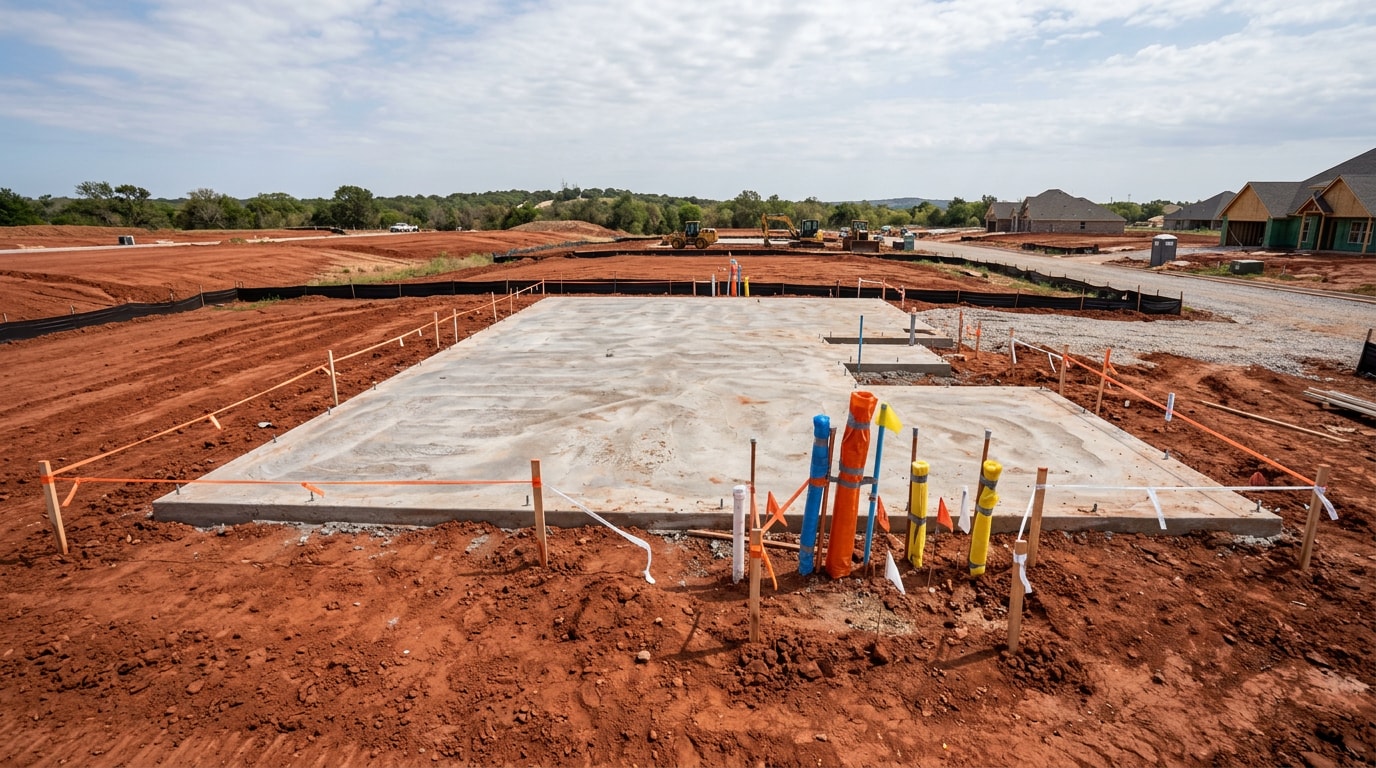
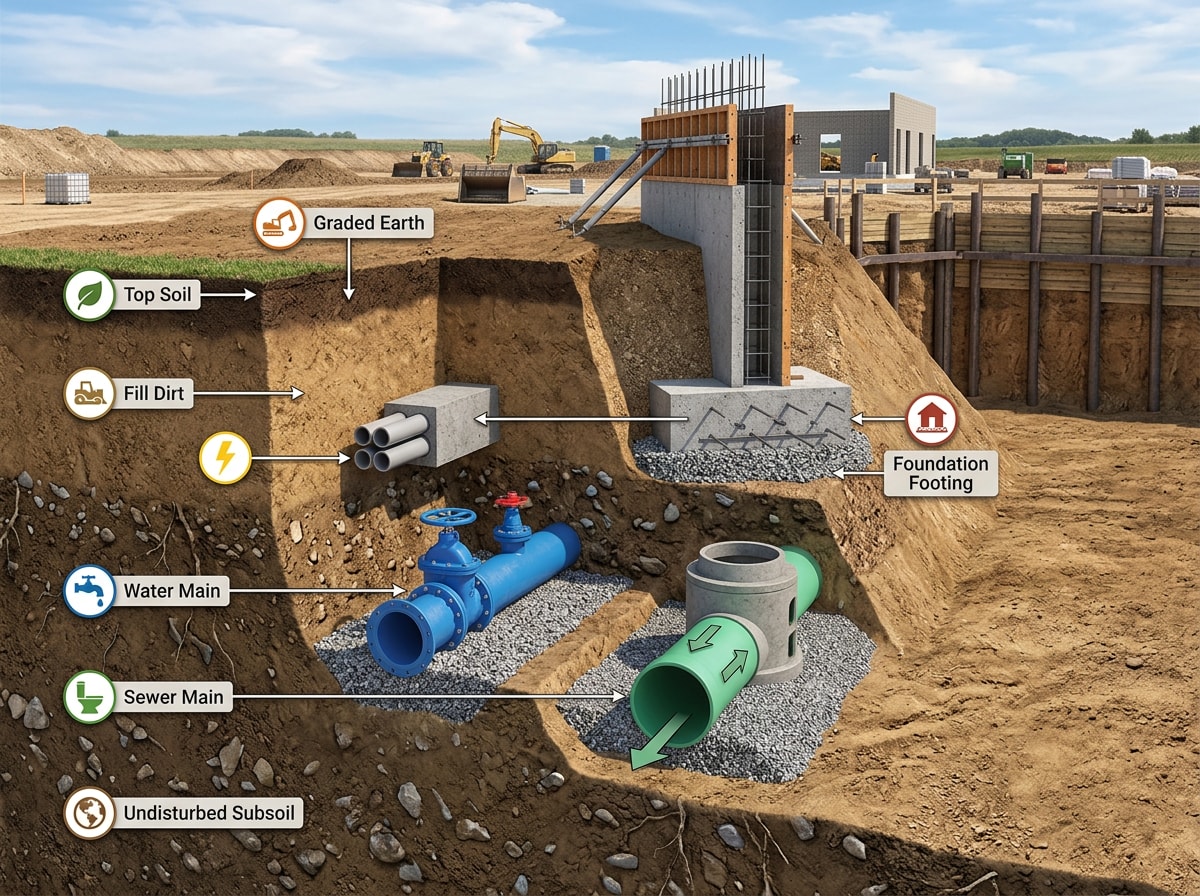
Once the pad is rough-graded, underground utilities go in. This covers water, sewer, storm drainage, and electrical duct banks, all sequenced carefully so trenching for one system doesn't damage another that's already installed.
On larger sites, utility integration also involves coordinating outfall structures and lift stations for wastewater and stormwater flow. Getting this sequencing wrong is one of the most common causes of rework and schedule slippage on Dallas projects.
Structural Concrete Elements
Concrete structures tie the earthwork and utility work together into something buildable. Site concrete, meaning foundations, slabs, curbs, and paving, has to interface precisely with the utility stubs and sleeves already in the ground.
Foundations are poured to the exact elevations set during grading, and paving connects the finished site to surrounding roadways and parking areas.
Heavy Civil vs. Residential-Scale Site Work: Which Contractor Does Your Project Need?
Here's something most "civil works" guides skip: the term covers two very different markets in Dallas, and confusing them wastes time on bids that were never going to fit your project.
Firms that bid on DART transit extensions, TxDOT roadway work, or large municipal utility contracts operate at a bonding and documentation scale built for public infrastructure. A homeowner adding a barndominium, building a full addition, or converting a garage into living space needs a different kind of partner, one who can scope the grading, drainage, and utility tie-ins as part of a coordinated build rather than a standalone mega-contract.
| Factor | Heavy Civil Firm | GC-Coordinated Site Work |
|---|---|---|
| Typical client | Municipalities, TxDOT, large developers | Homeowners, small developers, remodelers |
| Project scale | Multi-acre, multi-million-dollar | Single-lot, single-structure |
| Bonding and documentation | Certified payroll, performance bonds, as-builts | Standard contractor registration and insurance |
| Example scopes | Road construction, trunk utility lines, drainage districts | Addition footings, ADU utility tie-ins, barndominium pads |
| Who to call | Heavy civil / highway contractor | Licensed general contractor managing the full project |
If your project is a residential addition, a full home remodel, or a ground-up structure like a barndominium, the site work usually gets bundled into your general contractor scope rather than farmed out to a separate heavy civil firm. We cover this in more detail in our barndominium builders guide for The Colony, TX, where site prep and foundation work are a major cost driver. You can see examples of how we've handled this coordination on past projects.
What Underground Utility Systems Are Common on Dallas Projects?
Beyond the general utility integration described above, Dallas projects typically split underground systems into two practical categories: water and fire systems, and electrical and emergency infrastructure.
Water Distribution and Fire Protection Systems
Water mains and fire lines aren't optional add-ons. They're required for occupancy and life-safety compliance on almost every commercial project, and fire protection systems must meet specific sizing and flow-testing standards before a fire marshal will sign off.
Fire line sizing and sprinkler installation in Texas follow the national NFPA 13 standard, and local fire marshal review is frequently the slowest step in the permitting timeline. Builders who assume water distribution infrastructure will clear inspection quickly are often surprised by how much lead time fire system sign-off actually requires.
Electrical and Emergency Infrastructure
Electrical infrastructure runs underground alongside water and sewer lines, typically through duct banks that protect conduit from soil movement and future excavation damage. Emergency systems, including backup power conduits, fire alarm circuits, and emergency lighting feeds, get coordinated into this same underground network.
Because these systems are buried before paving goes in, mistakes here are expensive to fix later. Careful coordination during the utility phase avoids costly trench re-openings.
How Do Dallas Civil Teams Manage Quality, Schedule, and Accuracy?
Knowing what gets built only answers half the question. The other half is whether a given contractor can actually execute it correctly, on schedule, and within budget.
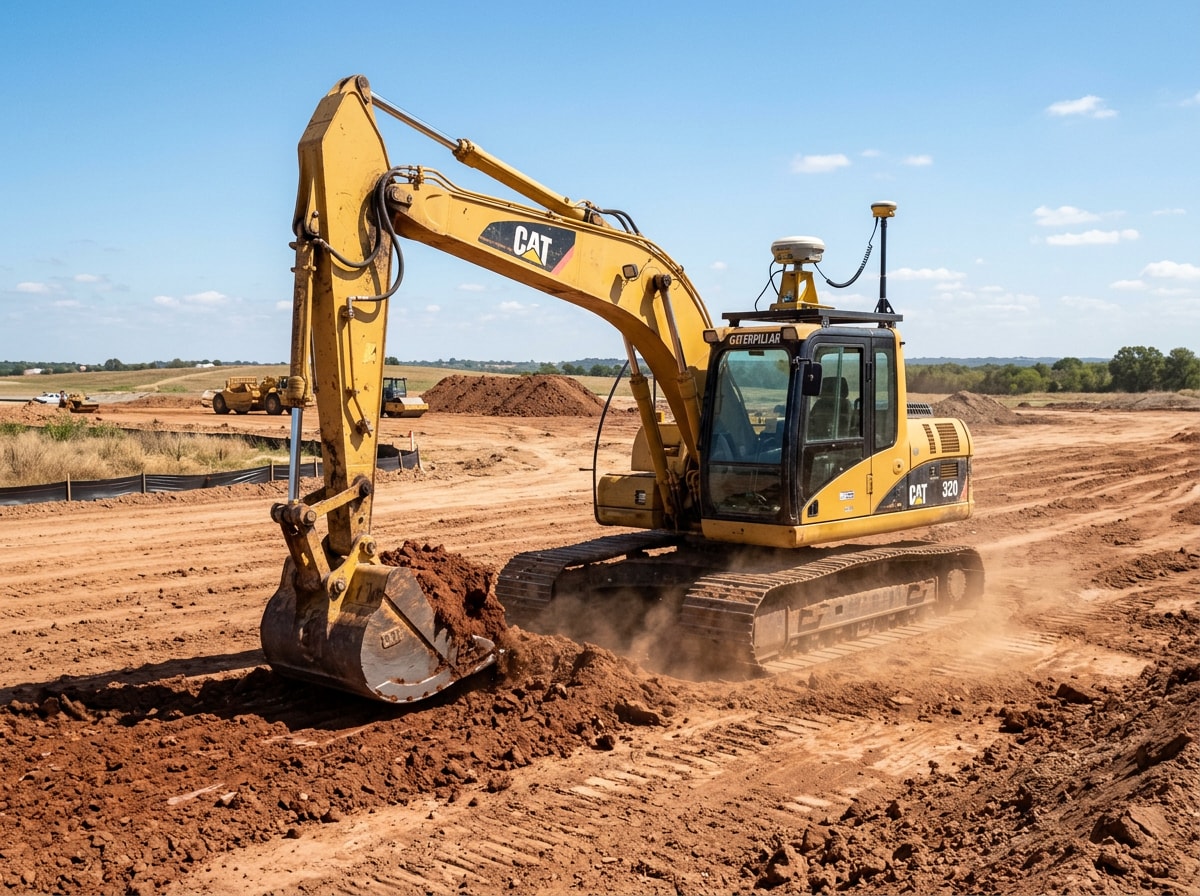
Modern civil and sitework crews rely on GPS-guided grading equipment to hit design elevations with less manual surveying. Precision grading tied to a digital model reduces the guesswork that used to cause rework on cut-and-fill operations, though it doesn't replace an experienced operator who can catch problems the model didn't anticipate.
Strong contractors also pair field crews with engineering oversight rather than relying on the crew alone to interpret plans. Engineers review grading tolerances, utility conflicts, and drainage calculations before and during construction, and dedicated project management ties these pieces together by tracking inspections, coordinating subcontractors, and keeping the schedule realistic.
Contractors who self-perform core scopes, rather than subcontracting every piece, generally close coordination gaps and improve schedule reliability. A firm with fewer handoffs means fewer delays caused by waiting on someone else's crew. Local experience matters too: a contractor who has worked DFW's clay soils and permitting process before will anticipate problems a newcomer might miss.
Who Hires Civil and Site Work Services Around Dallas?
Contractors handling site work in Dallas serve three broad client types, each with different priorities and documentation needs.
Municipalities. Municipal civil works projects demand heavy documentation, strict inspection protocols, and compliance with public works standards. Government infrastructure contracts often require certified payroll, bonding, and detailed as-built records that private clients rarely need.
Commercial developers. Commercial site development, including retail pads, industrial warehouses, and developer-driven projects, represents a steady share of demand around Dallas. Industrial sitework in particular tends to involve larger earthwork volumes and more complex utility routing than smaller commercial jobs.
Homeowners and small builders. Residential site prep is a smaller but consistent segment, covering grading, utility tie-ins, and foundation prep for additions, full remodels, and ground-up structures. It's less complex than municipal or commercial work, but it still requires the same grading accuracy, which is why full home remodeling projects that touch the foundation or footprint need a contractor who understands the civil piece, not just the finish work.
How Do You Find, Vet, and Qualify a Civil Works Contractor in Dallas?
This is the practical checklist: turning general knowledge about civil scopes into a way to screen bidders.
Licensing, registration, and local compliance. Texas doesn't issue a blanket statewide general contractor license, but Dallas still has its own requirements. Contractors typically need registration through the City of Dallas Building Inspection Division, and trades like electrical work need licenses regulated by the Texas Department of Licensing and Regulation. Verify a contractor's Texas business formation alongside any required trade licenses; these checks are quick to run and quickly rule out unqualified bidders.
Staffing strength and safety programs. Ask whether field staff carry current OSHA 10-hour or 30-hour training and whether the company runs background screening on new hires. These aren't just compliance checkboxes. They correlate with fewer jobsite incidents and fewer schedule disruptions from safety stop-work orders.
Excavation and trenching work carries strict federal safety requirements under OSHA's excavation standard, 29 CFR 1926 Subpart P, and contractors who actively monitor jobsite safety tend to avoid the costly delays that come with violations.
Market scale and scheduling reliability. Contractor scale affects what a firm can realistically deliver. Larger civil firms with deep crew benches can typically absorb schedule shocks, like weather delays and change orders, better than smaller outfits. Smaller contractors often offer more responsive communication and lower overhead on modest-sized projects. Match contractor scale to project size rather than assuming bigger is automatically better.
If you're not sure which scope your project actually needs, a home renovation consultation is a low-cost way to get a straight answer before you start collecting bids.
What Should Builders Know About the Dallas Civil Works Bidding Environment?
The Dallas civil and sitework bidding process has its own rhythm, and understanding it helps builders get accurate numbers instead of rushed guesses. Bid turnaround depends heavily on project complexity, how complete your soil and design documents are, and how many trades the scope touches, so treat any quoted timeline as project-specific rather than a fixed industry number.
The contractor market in Dallas mixes large self-perform firms with smaller specialty subcontractors, so builders comparing bids should confirm whether each quote covers the same scope. Some bids exclude utility tie-ins or assume soil conditions that drive costs up later. Providing complete geotechnical data upfront, asking for itemized scopes rather than lump sums, and giving bidders realistic time to price the work all help produce tighter, more comparable numbers.
Ready to scope your project? Request a quote and our team will walk through the civil and sitework pieces with you directly.
Conclusion and Next Steps
Civil works contracting covers the earthwork, utilities, and concrete scopes that determine whether everything built afterward holds up. Vetting a contractor on licensing, safety programs, and scale, and knowing whether your project needs a heavy civil firm or a GC-coordinated sitework scope, puts builders in a far stronger position before signing a contract.
Visit our homepage to see how we approach additions, remodels, and ground-up builds across Dallas-Fort Worth, including projects in Dallas, TX.
FAQ
What does "civil works" mean in construction?
Civil works refers to earthworks, underground utilities, drainage systems, and structural foundations that prepare land for building. It's distinct from vertical construction, which covers the building structure itself once the site is ready.
What's the difference between a heavy civil contractor and a general contractor who handles site work?
Heavy civil firms bid on municipal, TxDOT, and large-scale infrastructure work with the bonding and documentation that comes with it. A general contractor handling site work folds grading, drainage, and utility tie-ins into a residential or light-commercial project, like an addition or barndominium, rather than bidding it as a standalone civil contract.
How much does excavation and site prep cost in Dallas-Fort Worth?
Pricing varies widely based on soil conditions, site access, and scope. Commercial site prep packages often cost more per acre than residential jobs due to deeper utility runs and stricter compaction standards. Always request a site-specific quote rather than relying on general averages.
Are civil works contractors in Dallas licensed and bonded?
Texas has no single statewide general contractor license, but contractors operating in Dallas still need city registration, proper insurance, and bonding for most public and private projects. Always ask to see current bonding and insurance certificates before signing a contract.
What questions should I ask before hiring a contractor for site work?
Ask to verify licensing, insurance, and bonding status, and request references from similar past projects. It's also worth asking about communication cadence during construction and how the contractor handles unexpected issues like utility conflicts or weather delays.
Does a general contractor handle site work for additions and new structures?
Yes. For residential additions, full remodels, and ground-up builds like barndominiums, the grading, drainage, and utility tie-in work is typically scoped and managed by the general contractor as part of the overall project rather than hired out separately.